



Medically Reviewed by Dr. David Faust, DDS on September 22, 2026
The dental implant process is one of the most reliable tooth replacement options available, but it is also one of the most misunderstood in terms of what it actually involves. Many patients expect a quick fix and are surprised to learn that the full process, from consultation to final crown, can take anywhere from five months to well over a year. That timeline is not a flaw in the treatment — it reflects the precision required to create a result that can last a lifetime. Each stage serves a specific purpose, and skipping or rushing any one of them compromises the outcome.
Dental implants in Yardley, PA at Bucks County Smiles are placed and restored under the care of Dr. David Faust and our team, who walk patients through every stage of the process before treatment begins. Here is a detailed look at what to expect from start to finish.
The Initial Consultation and Treatment Planning
Every implant case begins with a thorough consultation and examination. During this appointment, Dr. Faust reviews your medical and dental history, takes X-rays, and may order a CBCT (cone beam) scan that provides a three-dimensional image of your jaw, bone structure, and the surrounding anatomy. This imaging is what allows precise planning of where the implant will be placed and whether any preparatory treatment is needed.
This appointment also establishes whether your gum health is adequate for implant placement. Any active gum disease must be treated and resolved before the implant process begins, since infection in the surrounding tissue directly increases the risk of implant failure. If gum treatment is needed, it will be completed first before any implant work proceeds. Our team will also review your insurance and discuss financing options so you have a clear picture of the full cost and payment timeline before committing.
Preparatory Procedures: Extractions and Bone Grafting
Not every patient needs preparatory procedures, but they are common enough that it is important to understand when they apply. If a damaged or failing tooth is still present at the implant site, it needs to be removed first. The complexity of that extraction, whether simple or surgical, affects how much additional healing time is needed before the implant can be placed.
Bone grafting is required when the jawbone at the implant site lacks the density or volume to support a titanium post. Bone loss begins as soon as a tooth is lost, which is why grafting is more frequently needed the longer a patient has gone without replacing a missing tooth. Grafting material, either from another area of the body or from a synthetic biocompatible source, is placed in the deficient area and must integrate before implant surgery can proceed. This stage can add four to twelve months to the overall timeline, depending on how much bone needs to rebuild and how quickly your body heals.
Implant Surgery
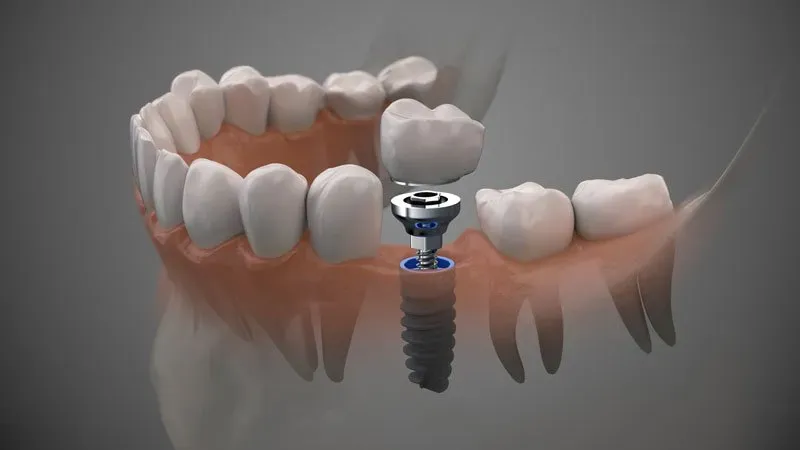
The implant surgery itself is a carefully controlled procedure that typically takes about two hours. You will receive local anesthetic, and sedation options are available depending on your comfort level and the complexity of your case. Dr. Faust makes a small incision in the gum tissue to expose the jawbone, uses precision instruments to create a site of the exact diameter needed, and places the titanium implant post into the prepared site. The gum tissue is then sutured closed over or around the implant depending on the approach used.
Titanium is the material used for nearly all dental implants because it is strong, lightweight, and biocompatible — the body does not reject it, and over time the surrounding bone fuses to its surface. If your implant is in a visible area of the mouth, a temporary crown may be placed while the implant heals, so you are not left with a visible gap during the recovery period. For implants placed further back in the mouth, a temporary prosthetic is generally not needed. Learn more about the potential complications of dental implant placement and how they are managed if they arise.
Osseointegration: The Critical Healing Phase
After surgery, the most important biological event in the entire process begins: osseointegration. This is the process by which the bone tissue grows around and into the surface of the titanium post, fusing with it to create a stable, permanent anchor. Without successful osseointegration, the implant cannot support a crown or other restoration, and the process cannot move forward.
Osseointegration typically takes three to six months for implants placed in the lower jaw and can take up to seven months for upper jaw implants, which have lower bone density. During this period, following Dr. Faust’s care instructions is essential. Smoking is one of the most significant risk factors for osseointegration failure, which is why patients are asked to avoid tobacco use for the duration of the process. Follow-up appointments are scheduled at intervals during this phase to monitor healing.
Abutment Placement and the Final Restoration
Once the implant has successfully integrated with the jawbone, the next step is placing the abutment — a small connector post that attaches to the implant and provides the structural base for the final restoration. In some cases, the abutment is placed at the same time as the implant post. In others, a minor second procedure is required to expose the implant and attach it. Recovery from abutment placement typically takes about two weeks.
After the abutment is in place, impressions of your teeth are taken and sent to a dental laboratory, which fabricates your permanent crown, bridge, or restoration to match the shade and shape of your natural teeth. This fabrication period generally takes four to six weeks. The final appointment involves placing and adjusting your permanent restoration, completing the process. Patients interested in replacing a full arch of missing teeth can learn more about fixed versus removable implant options to understand which design is appropriate for their situation.
Long-Term Care After Implant Placement
Dental implants do not decay the way natural teeth do, but the gum tissue and bone around them still require consistent care. Brushing twice daily, cleaning between teeth with floss or an interdental brush, and attending regular professional cleanings are all essential for long-term implant success. Professional appointments allow Dr. Faust to monitor the tissue around the implant, check the stability of the crown or restoration, and catch early signs of peri-implantitis (infection around the implant) before they progress.
With proper maintenance, dental implants placed by an experienced dentist may last many years, and in many cases, a lifetime. The restoration (crown or denture) may need to be replaced or adjusted over time due to normal wear, but the implant post itself typically remains stable indefinitely when properly cared for. Explore the full benefits of dental implant tooth replacement for a broader picture of why implants are considered the gold standard for addressing missing teeth.
Frequently Asked Questions About Dental Implant Stages
How long does the dental implant process take from start to finish?
Most single-implant cases take five to nine months from consultation to final crown placement. Cases that require bone grafting or extractions may take twelve to eighteen months or more, as grafting alone can require four to twelve months of healing. The timeline depends primarily on the condition of your jawbone, whether preparatory procedures are needed, and how quickly your body heals.
Is dental implant surgery painful?
The surgery itself is performed with local anesthetic and, if desired, sedation, so most patients experience little to no discomfort during the procedure. Some tenderness, swelling, and mild pain are normal in the days following surgery. These can generally be managed with over-the-counter pain medication. If discomfort becomes severe or persists beyond the first week, contact our office promptly.
Do I need a bone graft before getting a dental implant?
Not everyone does. Whether you need a bone graft depends on the density and volume of bone remaining at the implant site. Patients who have been missing teeth for a long time or who experienced bone loss due to gum disease are more likely to need grafting. This is determined during the initial consultation using imaging. If grafting is needed, it will be discussed as part of your full treatment plan before any procedures begin.
Can I eat normally while waiting for my implant to heal?
In the first days after implant surgery, a soft diet is recommended to protect the surgical site. As healing progresses and the implant integrates with the bone, most patients are able to return gradually to a normal diet. Your specific instructions will depend on the stage of treatment you are in, the number of implants placed, and whether a temporary restoration is in place. Dr. Faust will provide guidance at each appointment.
Start the Dental Implant Process at Bucks County Smiles
At Bucks County Smiles, Dr. David Faust and our team bring over 75 years of combined experience to dental implant placement and restoration. We take a thorough, individualized approach to every case, including a comprehensive evaluation of your bone health, gum health, and overall candidacy before any treatment begins. Our goal is to set accurate expectations for your timeline and walk you through each stage so there are no surprises along the way.
If you are considering dental implants and want to understand exactly what the process involves for your specific situation, we are ready to help. Contact our office today to schedule your implant consultation and take the first step toward a permanent new smile.
About the Author
Dr. David Faust, DDS
Bucks County Smiles, Yardley, PA
Dr. David Faust leads Bucks County Smiles in Yardley, Pennsylvania, where our team brings over 75 years of combined experience to dental implant placement, restoration, and comprehensive dental care. Dr. Faust provides personalized implant treatment plans for patients throughout Yardley and the surrounding area, with an emphasis on precise planning and long-term outcomes.
