



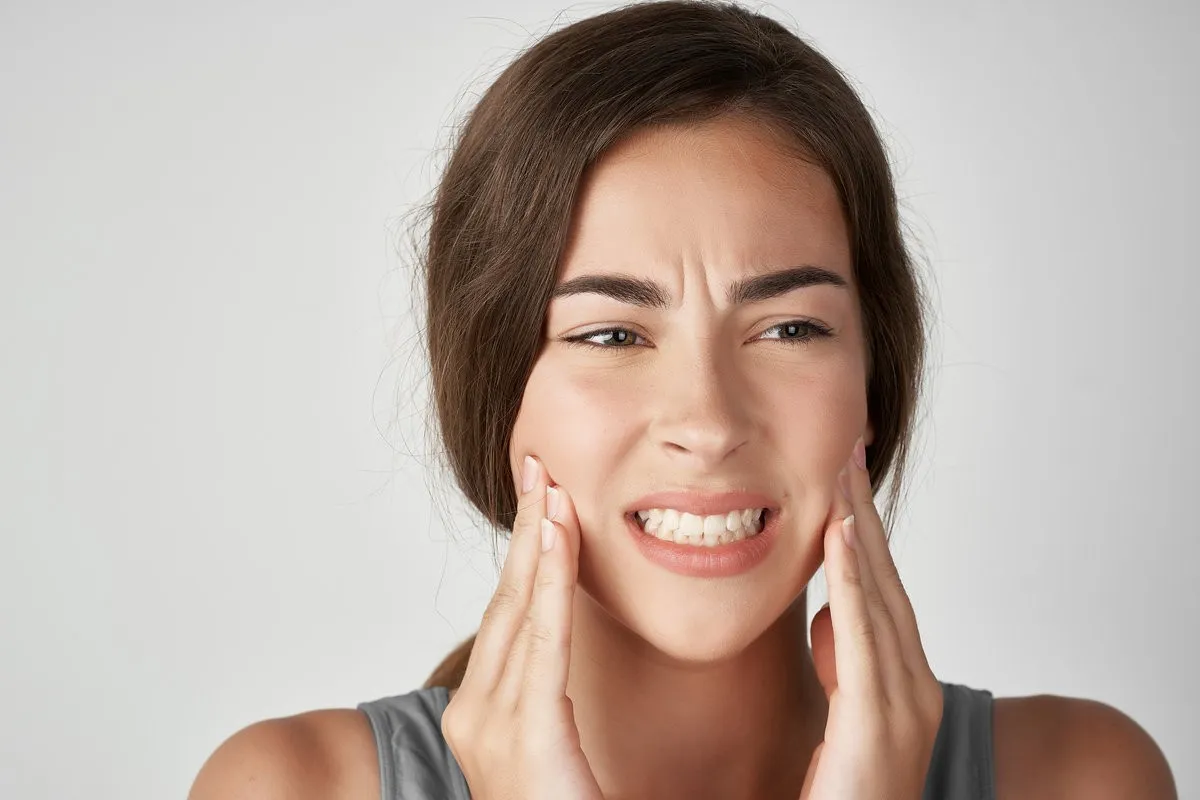
A dull ache that starts at the temples and spreads toward the jaw, teeth, or neck can feel like an ordinary headache, but it may be telling you something about the joint that connects your jaw to your skull. The temporomandibular joint works every time you chew, talk, or yawn, and when it becomes strained or misaligned, the resulting muscle tension can radiate upward into frequent, hard-to-explain headaches. For many people, this connection goes unnoticed for years because the pain shows up far from where it actually starts.
At Bucks County Smiles, we see this pattern often in patients who come in for headache relief but have never connected it to the health of their jaw. Our team examines the jaw, bite, and surrounding muscles to find what is driving the discomfort instead of only treating the pain on the surface, and this evaluation frequently reveals that chronic headaches are one of several symptoms of a treatable jaw condition.
What Is TMJ Disorder, and Why Does It Cause Headaches?
TMJ disorder, often shortened to TMD, develops when the jaw joint or the muscles controlling it stop moving smoothly together. Causes vary widely among patients and can include teeth grinding, jaw clenching, old injuries, arthritis, or a bite that sits slightly out of alignment. Because this joint sits close to a dense network of nerves and muscles connecting to the head, face, and neck, any strain placed on it can travel well beyond the jaw itself.
When the muscles around the jaw tighten repeatedly, they can pull on the same muscle groups responsible for tension in the temples, forehead, and scalp. Over time, this ongoing tension creates a cycle where jaw strain and head pain reinforce each other, which is why so many patients with TMD describe headaches as one of their most persistent symptoms. Addressing the jaw itself is often the piece that finally breaks that cycle.
Types of Headaches Linked to TMJ
TMJ-related head pain does not always look the same from patient to patient, and recognizing the pattern can help you describe your symptoms more clearly to your dental team.
Tension-Type Headaches
These present as a tight, band-like pressure around the forehead or temples, and they often worsen after a day of heavy chewing, stress, or clenching.
Migraine-Like Symptoms
Some patients experience throbbing pain, sensitivity to light, or nausea that closely mirrors migraine symptoms, even though the underlying cause is muscular rather than neurological.
Signs You Might Have TMJ-Related Headaches
Because headaches can stem from many sources, it helps to look for accompanying jaw symptoms that point specifically toward TMD. Watch for the following signs, particularly when they appear together.
- Clicking, popping, or grinding sounds when opening or closing your mouth
- Soreness or tightness in the jaw muscles, especially in the morning
- Headaches that concentrate around the temples rather than the whole head
- Difficulty opening your mouth fully or jaw movement that feels stuck
- Ear pain or a feeling of fullness without any signs of infection
If several of these symptoms show up alongside your headaches, a dental evaluation can help determine whether your jaw is playing a role.
How Bucks County Smiles Treats TMJ-Related Headaches
Our integrative approach means we look at the full picture of your oral and overall health rather than treating a headache in isolation. Dr. Kristen Scholl works closely with patients experiencing TMJ and sleep-related concerns, using a thorough evaluation of the jaw joint, bite alignment, and muscle activity to build a treatment plan suited to each person. This process often connects with our broader integrative dental medicine philosophy, which recognizes how oral health affects the rest of the body.
Depending on what the evaluation shows, treatment may include a custom nightguard to reduce clenching, bite adjustments, or Botox injections used specifically for TMJ relief rather than cosmetic purposes, which can relax overactive jaw muscles and ease the tension driving your headaches. According to the National Institute of Dental and Craniofacial Research, headaches are recognized as one of the primary categories of TMD, underscoring why a dental evaluation matters when headaches persist.
Find Headache Relief With Bucks County Smiles
Living with frequent headaches can wear down your patience and your quality of life, especially when the cause has never been clearly explained. If jaw soreness, clicking, or morning stiffness sounds familiar alongside your headaches, your jaw may be a piece of the puzzle worth exploring with a team that looks beyond the obvious.
Bucks County Smiles combines a personalized, family-owned approach with advanced technology and an integrative philosophy that considers your whole health picture, not just your teeth. Our team is ready to help you find out whether TMJ disorder is contributing to your headaches and build a plan to bring you lasting relief, so reach out through our contact form to get started.
