

Gum disease rarely feels urgent at first. A little bleeding when you floss, some tenderness near the gumline, maybe a bit of sensitivity you chalk up to brushing too hard. It is easy to put off treatment when the discomfort seems minor, but periodontal disease doesn’t stay minor if it goes unaddressed, and the type of procedure your dentist recommends can shape how comfortable that treatment feels from start to finish.
At Bucks County Smiles, we offer both traditional periodontal surgery and LANAP laser gum surgery, and we walk you through the differences before recommending either one. Our approach is rooted in integrative dental medicine, so we look at your gum health alongside your broader medical picture rather than treating it in isolation. Understanding what separates these two approaches may help you feel more prepared when a comprehensive exam points toward periodontal treatment.
What Happens During Traditional Gum Surgery?
Traditional periodontal surgery, often called flap surgery, involves lifting the gum tissue away from the tooth root with a scalpel so the area underneath can be cleaned directly. Your dentist removes tartar, bacteria, and diseased tissue from the pocket between the gum and the tooth, then smooths the damaged root surface before folding the gum back into place and closing it with sutures.
This method has been used for decades and gives your dentist direct visual access to the affected area, which can matter for more advanced bone loss or complex pocket shapes. The tradeoff is a longer healing process. Because the tissue is cut and sutured, patients often experience more swelling, more discomfort in the days following surgery, and a higher likelihood of gum recession as the tissue heals into its new position.
How LANAP Laser Gum Surgery Works Differently
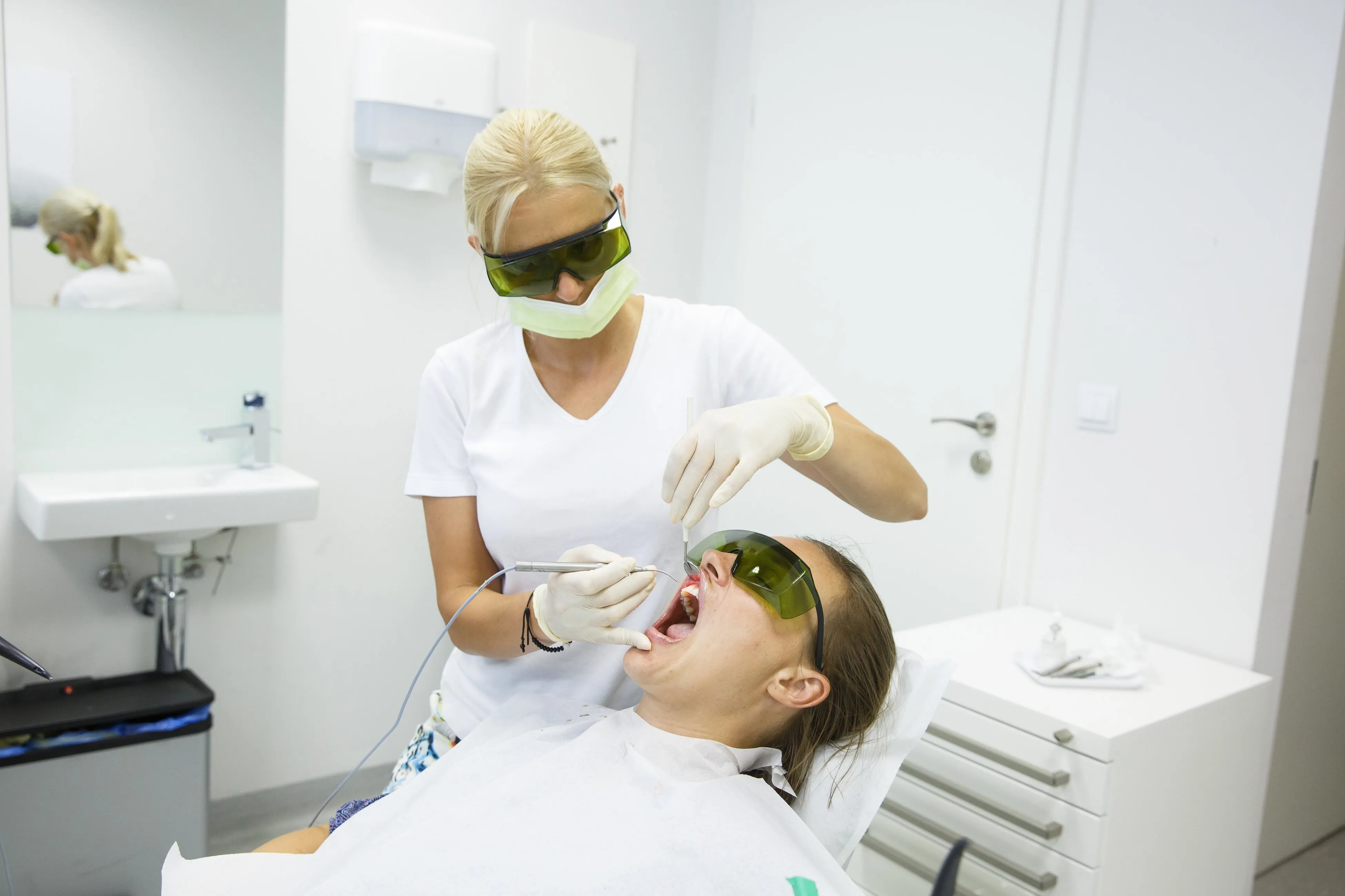
LANAP, which stands for Laser Assisted New Attachment Procedure, treats the same underlying problem without cutting or suturing the gum tissue. Dr. Aimee Dehbozorgi uses the PerioLase MVP-7 laser, guiding a fiber roughly the width of a few human hairs between the gum and the tooth to target diseased tissue and harmful bacteria while leaving healthy tissue alone.
Once the area is clear, the laser helps form a fibrin clot that seals the pocket and supports new gum tissue reattachment to the tooth. Because there are no incisions or stitches involved, many patients notice less swelling and a more comfortable recovery than they expect from gum surgery. The laser also stimulates the body’s own healing response in a way that supports bone and tissue regeneration around the treated area.
Comparing Recovery and Comfort
Recovery is often where the two procedures diverge most for patients. Traditional flap surgery typically requires a longer period of soft foods, more careful oral hygiene around the healing sutures, and a higher chance of temporary tooth sensitivity as the gumline settles into its adjusted position. Discomfort in the days immediately following surgery tends to be more noticeable as well.
LANAP recovery tends to be gentler on a day-to-day basis. Most patients return to normal eating within about a week, following a liquid or soft diet in the first few days while the fibrin clot stabilizes. Because the procedure preserves more of the surrounding healthy tissue, gum recession after LANAP tends to be less pronounced than after traditional surgery, though outcomes still depend on the severity of the disease and each patient’s healing response.
Which Procedure Fits Your Situation
Not every case is a fit for LANAP. Patients with mild to moderate periodontal disease are often excellent candidates for the laser approach, while more advanced bone loss or unusual pocket anatomy may still call for traditional surgical access. A comprehensive exam, including digital imaging and a review of your periodontal pocket depths, helps determine which option gives you the most predictable outcome.
Your overall health history plays a role in this decision as well. We coordinate with your primary care physician when conditions such as diabetes or cardiovascular disease are part of the picture, because gum disease and systemic health are closely connected. A few factors we weigh when comparing the two approaches include the following.
- Pocket depth and bone loss: Deeper pockets and significant bone loss sometimes require the direct access traditional surgery provides.
- Tissue preservation goals: Patients concerned about gum recession often lean toward the minimally invasive nature of LANAP.
- Medical history: Conditions affecting healing or blood clotting are reviewed carefully before either procedure is recommended.
- Recovery timeline: Patients balancing work or caregiving responsibilities may prioritize the shorter downtime associated with laser treatment.
Research comparing LANAP to traditional flap surgery has found that the laser approach can reduce probing depth with less gum recession than conventional techniques, a distinction documented in a peer-reviewed case series published through the National Institutes of Health. That kind of tissue preservation is part of why many patients ask about the laser option once they understand it is available. Whichever procedure fits your case, the goal remains the same: stopping the progression of gum disease and protecting the structures that keep your teeth stable.
If you are also dealing with gum recession alongside active disease, it is worth asking whether the Pinhole Surgical Technique could address both concerns in a coordinated treatment plan. Patients who have already had one form of periodontal treatment sometimes benefit from a related approach like Perio Protect for ongoing maintenance at home. A thorough oral cancer screening is also part of a complete periodontal evaluation, as gum tissue changes can sometimes signal issues beyond periodontal disease alone.
Get a Comprehensive Exam at Bucks County Smiles
Whether traditional gum surgery or LANAP laser treatment fits your situation, our team approaches periodontal care as part of your overall health rather than an isolated dental issue. Dr. Aimee Dehbozorgi brings hands-on experience with the LANAP protocol, and our collaborative care team reviews each case individually before recommending a path forward. We also coordinate with your medical providers when your periodontal health connects to broader conditions like diabetes or heart disease.
Gum disease may not go away on its own, and waiting can make treatment more involved than it needs to be. A comprehensive exam gives us the clearest picture of your periodontal health and the most appropriate treatment path. You can request an appointment through our contact form whenever you are ready to move forward.
