



Medically Reviewed by Dr. Kristen Scholl, DMD on October 17, 2026
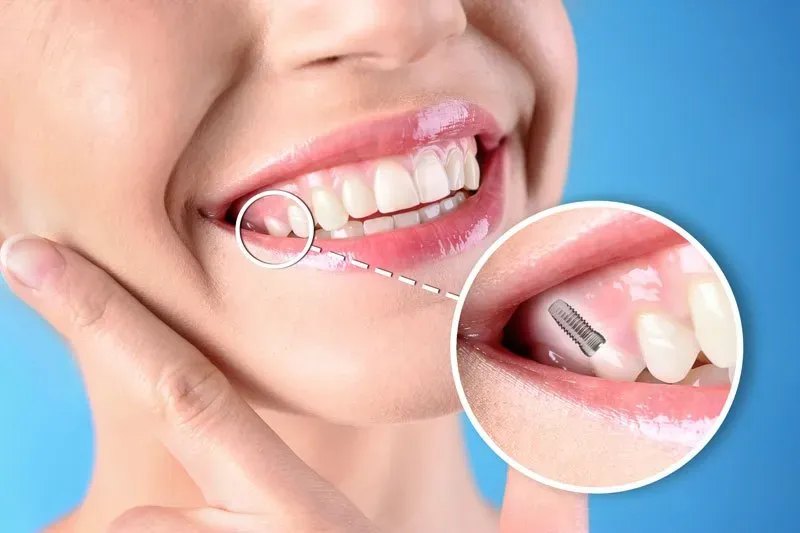
A dental implant is considered a permanent tooth replacement because the implant post fuses with your jawbone and becomes a fixed part of your mouth, rather than something that sits on top of the gums and comes out. “Permanent” does not mean indestructible, though. The fused implant is designed to stay in place for decades, while the crown or bridge on top of it can wear and may eventually need repair or replacement, and the bone and gum tissue around the implant need ongoing care to keep it stable.
At Bucks County Smiles, our team places and restores dental implants in Yardley, PA, and one of the most common questions we hear is what “permanent” really means over a lifetime. This post breaks that down: which parts of an implant are permanent, what long-term research shows, what can put an implant at risk, and what you can do to help yours last.
What Makes a Dental Implant Permanent
The permanence of an implant comes from a biological process called osseointegration. After the titanium implant post is placed in the jaw, bone cells grow directly against its surface over a healing period of several months. Once that bond forms, the implant functions much like a natural tooth root, anchored in bone rather than held in place by suction, clasps, or adhesive.
That anchorage is what separates an implant from a removable denture or partial. You do not take it out at night, it does not shift when you eat or speak, and it transmits chewing forces into the jawbone, which helps preserve the bone in that area instead of letting it shrink the way bone often does after a tooth is lost. For a closer look at the part of the implant that does this work, see our explanation of the role of the tooth post in dental implants.
Permanent Is Not the Same as Maintenance-Free
It helps to think of an implant as three parts with different lifespans. The implant post is the permanent foundation. The abutment connects the post to the visible tooth. The crown, bridge, or denture on top is the part you see and chew with, and like any restoration it takes daily wear.
Over many years, a crown can chip, loosen, or wear down, and a full-arch prosthesis may need adjustments or eventual replacement. When that happens, the restoration can usually be replaced without removing the implant itself, which is a major advantage over a traditional bridge, where damage to a supporting tooth can mean redoing the whole bridge. If you are wondering how that works, our post on whether you will need to replace your final prosthesis covers it in more detail.
What Long-Term Research Shows
Implants have one of the strongest long-term track records of any tooth replacement, but the numbers are worth reading carefully. A 2019 systematic review in the Journal of Dentistry estimated 10-year implant survival at about 96 percent in its main analysis and about 93 percent in a more conservative analysis that accounted for patients lost to follow-up.
Over two decades, the data are thinner. A 20-year meta-analysis published in Clinical Oral Investigations pooled a small number of studies and found survival ranging from roughly 78 to 92 percent depending on study design and how missing data were handled, which the authors summarized as about four out of five implants still functioning after 20 years. In other words, most implants last a very long time, but not every implant lasts forever, and follow-up care matters long after the implant is placed.
What Can Put a Permanent Implant at Risk
When implants are lost years after placement, the cause is usually not the titanium itself but the tissue around it. The most common long-term threat is peri-implantitis, an inflammatory condition similar to gum disease that can gradually destroy the bone supporting an implant. A 2022 systematic review and meta-analysis estimated that roughly one in five implant patients develops peri-implantitis at some point, with rates varying widely by how the condition is defined.
Several factors raise that risk, and most of them can be managed with your dental team.
- Plaque buildup around the implant: Bacteria at the gumline can inflame the tissue around an implant just as they can around a natural tooth.
- A history of gum disease: Patients who have had periodontitis tend to have a higher risk and benefit from closer monitoring.
- Smoking and uncontrolled diabetes: Both can impair healing and increase inflammation around the implant.
- Grinding or clenching: Heavy, repeated forces can loosen components or damage the restoration over time.
- Skipped checkups: Early changes around an implant are often painless and are usually caught at routine visits.
If an implant does develop problems, early treatment can often stabilize it. Our failed implant treatment page explains the options when an implant is struggling or needs to be replaced.
How Implants Compare to Other Tooth Replacement Options Over Time
Every tooth replacement option has a lifespan, and the differences show up over years rather than weeks. Removable dentures rest on the gums and often need relining or remaking as the jawbone beneath them changes shape. A traditional bridge relies on the neighboring teeth for support, which means those teeth must be reshaped and carry extra load, and problems with one of them can affect the whole bridge.
An implant stands on its own in the bone, so it does not depend on neighboring teeth and does not slip on the gums. That independence is why implants are often the most durable choice for a single missing tooth and a stable foundation for replacing multiple teeth. Patients who lack enough bone for an implant may first need bone grafting to give the implant a secure base.
How to Help Your Implant Last a Lifetime
The habits that protect an implant are straightforward, and they make a real difference in how long it lasts. Brush twice a day with a soft-bristled brush, clean around the implant daily with floss, an interdental brush, or a water flosser, and keep your professional cleanings and exams on schedule so we can check the gum tissue and bone around the implant. If you grind your teeth, a night guard can help protect both the implant and its crown.
Managing your overall health matters too. Quitting smoking and keeping blood sugar under control both support the tissue around an implant. With consistent care, most patients can expect their implants to serve them for many years, and our team monitors them at every visit so small concerns are addressed early.
Plan Your Permanent Tooth Replacement in Yardley, PA
Dr. David Faust is a graduate of the University of Pennsylvania School of Dental Medicine who has practiced since 1988, with a focus on implant and reconstructive dentistry, including single tooth implants and full arch restoration. Our team evaluates your bone, gum health, and bite before recommending an implant plan, so your new tooth is built on a foundation designed to last.
If you are ready to explore a permanent option for replacing missing teeth, get in contact with our doctors, Dr. David Faust and our team at our practice, to schedule an appointment today.
Frequently Asked Questions About Permanent Dental Implants
What does osseointegration mean and how does it make dental implants permanent?
Osseointegration is the biological process by which bone grows directly against the surface of the titanium implant post after it is placed. Titanium is biocompatible, so the body generally accepts it well. Over several months, this bond anchors the implant securely in the jaw, creating a stable foundation that works much like a natural tooth root. That fixed anchorage is what makes an implant a permanent replacement rather than a removable one.
How long does the osseointegration process take?
Osseointegration typically takes several months, often in the range of three to six months, depending on your healing, bone density, and where the implant is placed in the jaw. Patients who needed bone grafting before implant placement may need additional time. We monitor healing during this period to confirm the implant has integrated before the final restoration is attached.
Will the crown on my implant last as long as the implant itself?
Not always. The implant post is designed to stay in the bone for decades, while the crown, bridge, or denture attached to it takes daily chewing forces and can wear, chip, or loosen over time. When a restoration needs to be replaced, it can usually be swapped out without removing the implant, so the permanent foundation stays in place.
Can dental implants fail, and what causes implant failure?
Dental implants have a strong long-term track record, but failure can occur. Early failure usually happens when the implant does not integrate with the bone, while later problems are most often linked to peri-implantitis, an inflammatory condition affecting the gum and bone around the implant. Risk factors include poor oral hygiene, a history of gum disease, smoking, uncontrolled diabetes, and heavy grinding. Regular checkups help catch problems early, when they are easier to treat.
How do I care for my permanent dental implants?
Brush twice daily with a soft-bristled toothbrush, clean around each implant every day with floss, an interdental brush, or a water flosser, and keep your regular professional cleanings and exams. Implants do not need adhesives or nightly removal like traditional dentures. Avoid chewing on very hard objects, and ask about a night guard if you grind your teeth. With consistent care, implants can serve you for many years.
ABOUT THE AUTHOR
Dr. Kristen Scholl, DMD
Clinical Director, Bucks County Smiles, Yardley, PA
Dr. Kristen Scholl earned her Doctor of Dental Medicine degree from the University of Pennsylvania School of Dental Medicine and completed her undergraduate studies at Penn State University’s Schreyer Honors College. Clinical Director of Bucks County Smiles, she is a Premier Invisalign® Provider with advanced training in dental sleep medicine and TMJ treatment, serving patients in Yardley and throughout Bucks County, PA.
