


Medically Reviewed by Dr. David Faust, DDS on September 22, 2026
For patients who have lost most or all of their teeth and currently rely on traditional dentures, slipping, soreness, and dietary restrictions are a familiar frustration. Dentures rest on the gum tissue and rely on suction or adhesive to stay in place, which means they shift during eating and speaking, and the jawbone beneath them gradually deteriorates over time without root stimulation. Implant supported dentures solve both problems by anchoring the prosthesis to titanium posts placed in the jawbone, creating the stability of fixed teeth with the convenience of a removable appliance.
At Bucks County Smiles in Yardley, Dr. David Faust evaluates each patient for implant supported dentures in Yardley, PA using a thorough review of oral health, bone structure, and overall health. The question of whether you are a good candidate comes down to a set of clearly defined factors, most of which can be assessed or addressed before treatment begins.
What Are Implant Supported Dentures?
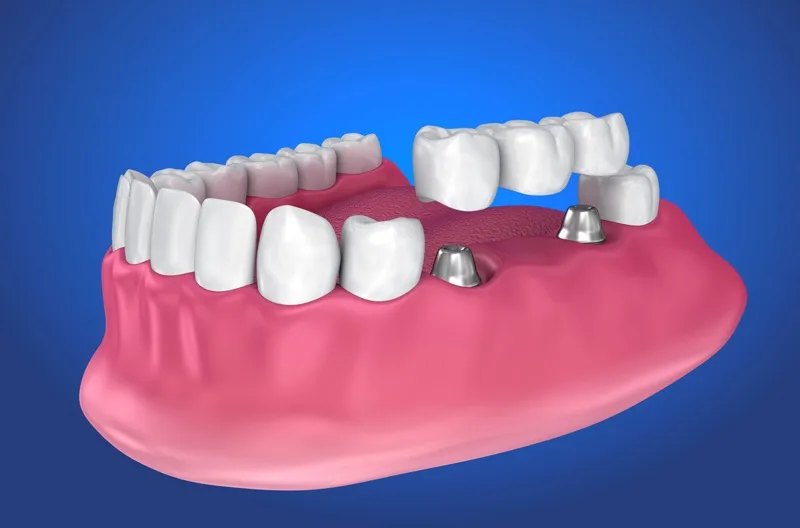
Implant supported dentures use two or more dental implants placed strategically in the jawbone as anchors for a full denture. The denture snaps onto or clips over the implant posts, creating a fit that does not shift, does not require adhesive, and does not rely on gum contact for stability. Most designs are removable for cleaning, though fixed (non-removable) versions are also available for patients who want a permanent solution.
Because the implant posts act like artificial tooth roots, they provide the jawbone stimulation that traditional dentures cannot. This stimulation helps prevent the bone resorption that causes the facial collapse associated with long-term denture wear. Patients who transition from traditional to implant supported dentures frequently report significant improvements in chewing ability, speech clarity, and confidence in social situations.
Who Makes a Good Candidate for Implant Supported Dentures?
Most adults who are missing the majority of their teeth, or who currently wear a full denture, are potential candidates for implant supported dentures. The specific requirements involve both your oral health and your general health. Here is what Dr. Faust evaluates during the candidacy assessment:
- Jawbone density and volume. The implant posts must anchor into a jawbone with sufficient density to support them. Patients who have worn traditional dentures for many years may have experienced bone loss that reduces bone volume. In some cases, bone grafting can restore enough density to proceed with implants.
- Gum health. Active gum disease must be treated and resolved before implant placement. The presence of infection in the gum tissue significantly increases the risk of implant failure.
- General health. Conditions like uncontrolled diabetes, autoimmune disorders, and bleeding disorders can affect healing and implant integration. These conditions do not automatically disqualify a patient, but they require careful evaluation and coordination with your medical provider.
- Non-smoking status or willingness to quit. Smoking substantially increases the risk of implant failure during the healing phase. Patients who smoke are strongly encouraged to stop before and during treatment.
- Realistic expectations. Implant supported dentures are a significant investment in both time and cost. Understanding the full process, including any preparatory procedures, helps ensure patients are prepared for the commitment involved.
Patients who meet these criteria are strong candidates, and the evaluation appointment is the right place to confirm which factors apply to your situation. Learn more about what the implant placement process involves so you know what to expect if you move forward.
What If You Do Not Have Enough Bone?
Insufficient jawbone density is one of the most common reasons patients initially believe they cannot receive implants. It is also one of the most addressable. Bone grafting, a procedure in which grafting material is placed at the implant site to stimulate new bone growth, can restore the volume needed to support implant posts. This adds time to the overall treatment timeline, generally four to twelve months depending on the amount of bone that needs to rebuild, but it makes implant placement possible for many patients who were told they were not candidates elsewhere.
A CBCT (cone beam CT) scan taken during your consultation provides a precise three-dimensional image of your bone structure. This imaging eliminates guesswork and allows Dr. Faust to determine exactly what your jawbone can support, and what, if anything, needs to be done first.
How Implant Supported Dentures Compare to Traditional Dentures
Traditional dentures and implant supported dentures both replace a full arch of missing teeth, but they differ significantly in stability, comfort, and long-term bone health outcomes. Traditional dentures rest on the gumline and can shift during use, which limits what patients can eat and can cause sore spots over time. Because they provide no root stimulation, they do not prevent the bone resorption that changes facial structure over time.
Implant supported dentures, by contrast, stay securely in place during eating and speaking because they are anchored to implant posts. Most patients find they can return to a much broader diet than was possible with traditional dentures. The implant posts also maintain the stimulation the jawbone needs to preserve its structure. For patients currently wearing a traditional denture and experiencing discomfort or instability, implant supported dentures represent a meaningful upgrade in both function and comfort.
Frequently Asked Questions About Implant Supported Dentures
How many implants are needed to support a full denture?
Most implant supported denture designs use two to four implants per arch, depending on the type of denture and the amount of bone available. Some full-arch fixed designs use four to six implants. Dr. Faust will recommend the number of implants based on your specific bone anatomy, the design of the denture, and the level of stability you are seeking.
How long does the implant supported denture process take?
The process varies depending on whether preparatory procedures are needed. Patients who have adequate bone and healthy gums may complete treatment in five to nine months. Those who require bone grafting or gum disease treatment first may take twelve to eighteen months or longer. A temporary denture is typically worn during the healing period so you are not without teeth at any stage.
Are implant supported dentures removable?
Most implant supported dentures are designed to be removed for daily cleaning. They attach to the implant posts with a snap or clip mechanism and are easy to take in and out. Fixed implant-supported dentures, which are permanently secured and can only be removed by a dentist, are also available for patients who prefer a fully non-removable solution. Dr. Faust will discuss both options and which is more appropriate for your situation.
Can I get implant supported dentures if I have had dentures for many years?
Yes, in many cases. Long-term denture wearers often have experienced some degree of bone loss, but bone grafting can restore the density needed to support implant posts in suitable candidates. The candidacy evaluation will include imaging to assess your current bone volume and determine what, if any, preparatory treatment is needed before implants can be placed.
Find Out If You Are a Candidate at Bucks County Smiles
At Bucks County Smiles, Dr. David Faust and our team bring over 75 years of combined experience to implant dentistry and full-arch restoration. We evaluate each patient individually, using precise imaging and a thorough oral health assessment to determine candidacy and build a treatment plan that reflects your specific anatomy and goals. If bone grafting or other preparatory treatment is needed, we will explain exactly what that involves and how it affects your timeline.
If you have been wondering whether implant supported dentures could improve your quality of life, the best next step is a consultation. Contact our office today to schedule your evaluation and find out whether you are a candidate for implant supported dentures in Yardley.
About the Author
Dr. David Faust, DDS
Bucks County Smiles, Yardley, PA
Dr. David Faust leads Bucks County Smiles in Yardley, Pennsylvania, where our team brings over 75 years of combined experience to implant dentistry, full-arch restoration, and comprehensive dental care for families throughout the area. Dr. Faust evaluates every implant patient individually and builds treatment plans that account for bone health, gum health, and long-term outcomes.
