

Most people know that a dental implant involves a titanium post and a crown. The third component, the abutment, rarely gets mentioned, but it is the piece that holds the entire restoration together. Choosing the right abutment material and design matters for both the long-term performance of the implant and the way the restoration looks at the gumline.
At Bucks County Smiles in Yardley, PA, every step of the implant restoration process is explained in detail so patients understand exactly what components are being placed and why. The abutment is not a minor detail; it is a clinical decision that shapes the outcome.
What an Abutment Is
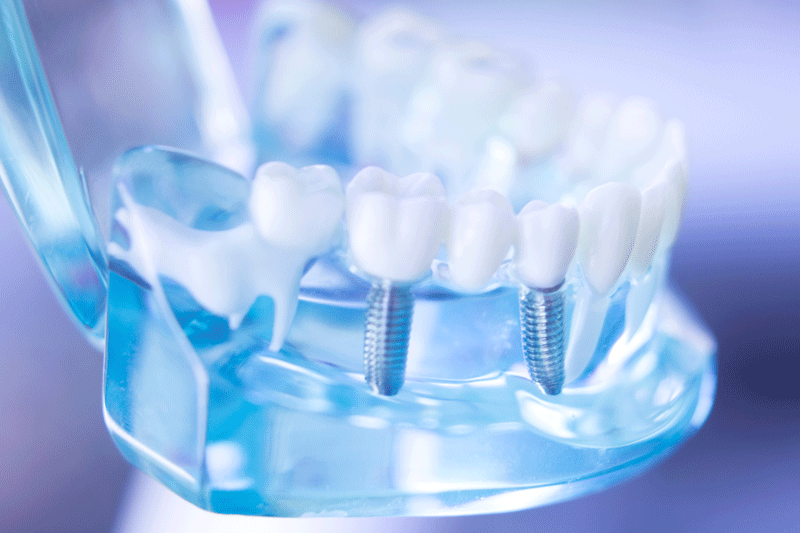
The abutment is a connector piece that attaches to the top of the implant post and extends through the gum tissue to support the crown, bridge, or denture placed on top of it. Once osseointegration is complete and the implant has fused securely with the bone, the abutment is attached in a brief appointment. In some cases, a temporary abutment is placed at the time of implant surgery, and a permanent one is fitted later once healing is confirmed.
The abutment shapes the gum tissue around it as healing continues after its placement. The way the tissue grows around the abutment determines the soft tissue collar that frames the final crown, which is why abutment selection and placement technique contribute to the aesthetic outcome as much as the crown itself.
Abutment Types and Materials
The right abutment depends on the location in the mouth, the depth of the implant, the surrounding tissue thickness, and the type of restoration being placed above it.
Titanium abutments are the most widely used option. They are highly durable, biocompatible, and appropriate for most situations, including molar positions where the forces of chewing are greatest. In the posterior areas of the mouth where the abutment is not visible, titanium is the standard choice.
Zirconia abutments are tooth-colored, making them the preferred option in highly visible areas where the abutment edge may be seen through thin gum tissue. They offer excellent aesthetics and are also well-tolerated by surrounding tissue. For patients with thinner gums or front-tooth restorations, a zirconia abutment can prevent the grayish appearance that sometimes shows through with a metal option.
Custom abutments are designed specifically for a patient’s anatomy, particularly when the depth, angle, or soft tissue profile requires a precisely tailored solution. Custom fabrication adds to cost but can produce superior aesthetic and functional outcomes in complex cases.
When the Abutment Is Placed
Abutment placement typically occurs after the implant has fully integrated with the bone, which takes several months depending on the patient and the placement site. Some treatment plans call for a healing abutment placed initially to shape the gum tissue, followed by the final abutment once the permanent crown is ready. In immediate load protocols, both the abutment and a temporary crown may be placed the same day as the implant, though this approach is reserved for specific clinical situations where bone density and implant stability support it.
According to the National Institute of Dental and Craniofacial Research, implant-supported restorations are among the most clinically successful approaches to replacing missing teeth. Abutment selection is a component of that success that often determines the aesthetic quality of the final result.
How the Abutment Affects Your Final Results
A well-placed, properly selected abutment creates the right emergence profile — the angle and contour at which the restoration exits the gum — so the final crown looks natural and is easy to clean. A poor emergence profile, even with a well-made crown on top, can make the restoration look artificial or create areas where plaque accumulates and hygiene is difficult.
At Bucks County Smiles, abutment selection is made as part of a complete treatment plan rather than as an afterthought. The restoration planning process includes considering the tissue type, bite forces, aesthetic zone requirements, and the patient’s overall oral health.
Learn About Your Options at Bucks County Smiles
Every component of your implant restoration is a decision that affects your long-term outcome. The team at Bucks County Smiles walks through each one in detail so you enter treatment with a complete picture. Dr. David Faust, Dr. Kristen Scholl, and Dr. Aimee Dehbozorgi bring comprehensive implant experience to every case, from single tooth replacements to full arch restorations.
If you are planning for dental implants or have questions about any aspect of the process, contact our Yardley, PA office to schedule a consultation with our team.
