


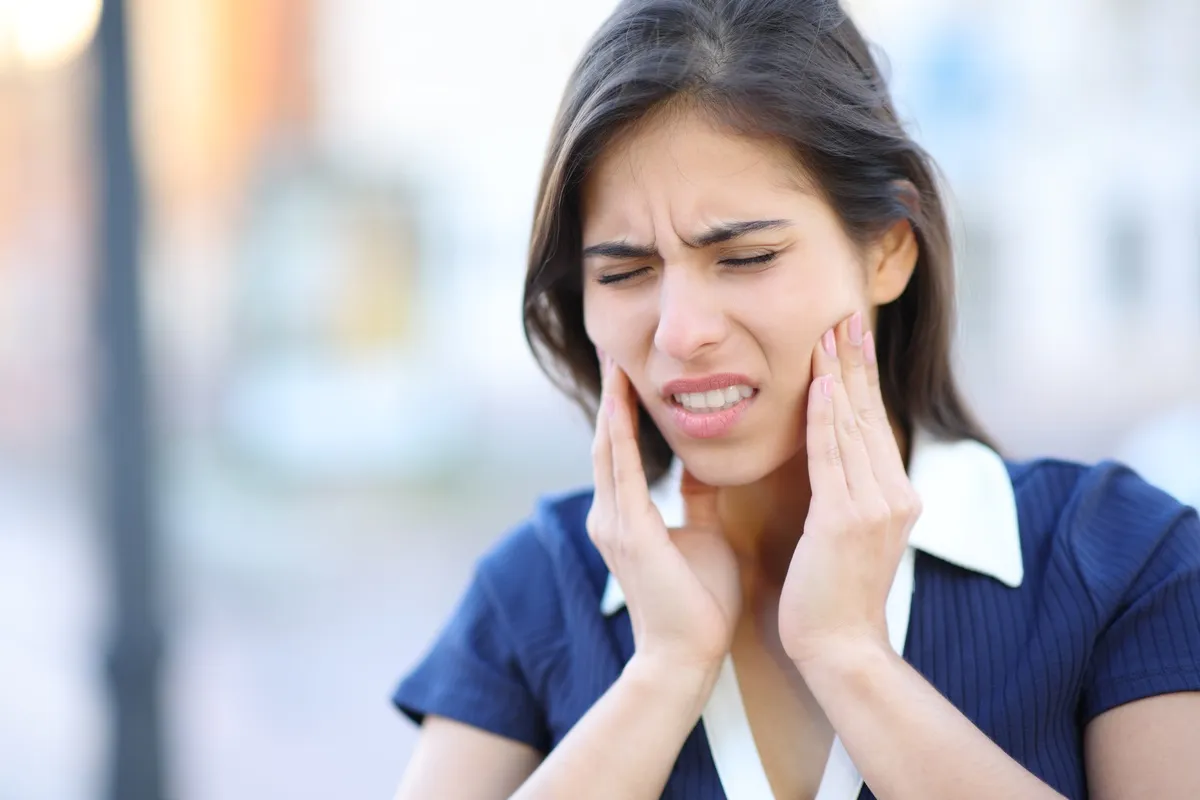
Jaw pain that will not improve, a clicking sound every time you chew, or headaches near your temples can make eating, talking, and sleeping harder than they should be. Some people brush it off as stress until the discomfort becomes part of daily life. Figuring out what is causing it is the first step toward feeling normal again.
At Bucks County Smiles, Dr. Kristen Scholl works with patients across Yardley and eastern Bucks County who are dealing with exactly this kind of jaw discomfort, and our TMJ treatment approach starts with understanding what is driving your specific symptoms. We look at the joint, the surrounding muscles, and your daily habits before recommending any next steps, as TMJ disorder rarely has one single cause or fix.
What Is TMJ Disorder?
The temporomandibular joint connects your jawbone to your skull, and it works every time you speak, chew, or yawn. When something in that joint or the muscles around it stops functioning correctly, dentists refer to it as TMJ disorder or TMD. It can develop gradually or show up after an injury, and it does not always have an obvious trigger.
Some cases resolve on their own within a few weeks. Others become a lasting source of discomfort that affects more than the jaw, as the muscles involved connect to the neck, shoulders, and nerves near the ears.
Common Signs of TMJ Disorder
TMJ disorder shows up differently from person to person, which is part of why it often goes unrecognized for months or longer. Many patients describe a dull ache near the jaw joint that gets worse when chewing, while others notice sounds or stiffness before pain ever sets in. Other common signs include:
- Jaw pain or tenderness: Discomfort near the ears or jaw joint that tends to worsen with chewing or talking.
- Clicking or popping sounds: Noises in the jaw joint when opening or closing the mouth, sometimes with locking.
- Frequent headaches: Tension type headaches or migraines that seem to originate near the temples or jaw.
These symptoms can appear alone or together, and they may come and go before settling into a pattern. If any of them last more than a few weeks, an evaluation can help clarify what is happening in the joint itself.
What Causes TMJ Disorder?
Teeth grinding, jaw clenching, and chronic stress are frequently linked to TMJ disorder, particularly in patients who clench without realizing it during sleep. Previous jaw injuries, arthritis in the joint, and structural issues with the disc inside the joint can also play a role.
In many cases, no single cause stands out, and the disorder results from a combination of physical and lifestyle factors. According to the National Institute of Dental and Craniofacial Research, temporomandibular disorders are roughly twice as common in women as in men, and researchers have not found evidence that a bad bite or braces cause the condition.
How Is TMJ Disorder Diagnosed?
Diagnosing TMJ disorder starts with a conversation about your symptoms, followed by an exam of how your jaw moves and whether it makes sounds when opening and closing. Dr. Scholl checks for muscle tenderness and asks about habits like clenching or grinding that patients are not always aware of, an approach in keeping with our broader focus on integrative dental medicine and whole body health.
Imaging is sometimes used to get a clearer picture of the joint, especially when symptoms have lasted a while or have not responded to changes at home. Because TMJ symptoms often overlap with sleep issues, patients with restless nights may benefit from mentioning that during the exam. Our sleep apnea treatment team works closely with our TMJ specialists on shared cases.
How Is TMJ Disorder Treated?
Most treatment plans start with the least invasive options, as many TMJ symptoms improve without surgery or permanent changes to the teeth or jaw. This may include a custom nightguard to reduce nighttime clenching, warm or cold compresses, and dietary changes that reduce strain on the jaw while it heals.
For patients whose jaw muscles stay tense despite conservative care, Botox injections may help relax the muscles responsible for clenching and reduce pain. At Bucks County Smiles, this option is used specifically for TMJ relief rather than cosmetic purposes, and it is generally considered only after simpler approaches have been tried. Every plan looks different, because every patient’s jaw, habits, and stress levels are different.
Contact Bucks County Smiles for TMJ Treatment In Yardley
Jaw pain, clicking, and recurring headaches are worth paying attention to rather than working around. Dr. Kristen Scholl and our collaborative care team look at the full picture, from muscle tension to sleep habits to stress, before recommending a plan built around your specific symptoms. Whether the right next step is a nightguard, Botox for TMJ relief, or a referral through our broader general dentistry services, our approach favors conservative options first.
If jaw discomfort has been part of your routine for weeks or longer, a comprehensive exam with Dr. Kristen Scholl can help identify what is causing it and what may bring relief. You can fill out our contact form to schedule a visit.
