
Most patients who ask about dental implants focus on results: how the implant will look, how long it will last, and how closely it will function like a natural tooth. Those are the right questions, and the answers are consistently positive for well-placed implants in healthy patients. But it is equally worth understanding what the recovery period involves, including the side effects that are normal and expected versus the signs that warrant a call to the office.
At Bucks County Smiles in Yardley, Pennsylvania, Dr. David Faust walks every patient through what to anticipate before and after dental implant placement, so there are no surprises during recovery. Knowing what is normal helps patients manage it effectively and helps them recognize the small percentage of cases where something requires follow-up.
Normal Side Effects After Implant Placement
Dental implant placement is a surgical procedure, and some degree of recovery is expected for virtually every patient. The most common side effects in the days following placement include soreness at the implant site, mild to moderate swelling of the gum tissue and surrounding area, minor bleeding in the first 24 hours, and some bruising. These reactions are the body’s normal response to a surgical procedure and typically resolve within one to two weeks.
Over-the-counter pain relievers such as ibuprofen or acetaminophen are usually sufficient for managing discomfort during this period. Rinsing gently with warm saltwater, avoiding hard foods at the implant site, and applying a cold compress to the face in the first 48 hours can all help reduce swelling and promote healing.
Less Common Complications to Watch For
A small percentage of patients experience complications that go beyond normal post-surgical recovery. Infection at the implant site, nerve sensitivity or numbness in the lips or chin in cases involving the lower jaw, and sinus complications for implants placed in the upper jaw are all possibilities that a skilled implant dentist monitors for and addresses when they arise.
Peri-implantitis, an infection of the tissue surrounding the implant, can develop if oral hygiene is not maintained after placement. It is one of the more common reasons for implant complications and is preventable with consistent home care. Signs of infection, including increasing pain several days after placement, unusual discharge, or fever, warrant a prompt call to the office rather than waiting for the next scheduled visit.
The Role of Planning and Technique in Minimizing Complications
The likelihood of complications is strongly influenced by the thoroughness of treatment planning and the precision of the surgical technique. Patients who receive a comprehensive evaluation prior to placement, including detailed imaging of the jaw, bone density assessment, and a complete review of their medical history and medications, have significantly lower complication rates than those who move to placement without that groundwork.
According to the National Institute of Dental and Craniofacial Research’s Oral Health in America report, advances in implant technology and surgical protocols over the past two decades have improved predictability and long-term outcomes considerably. Selecting an implant provider with a careful, systematic approach to planning and execution is the most important factor within a patient’s control.
What to Expect During the Healing Period
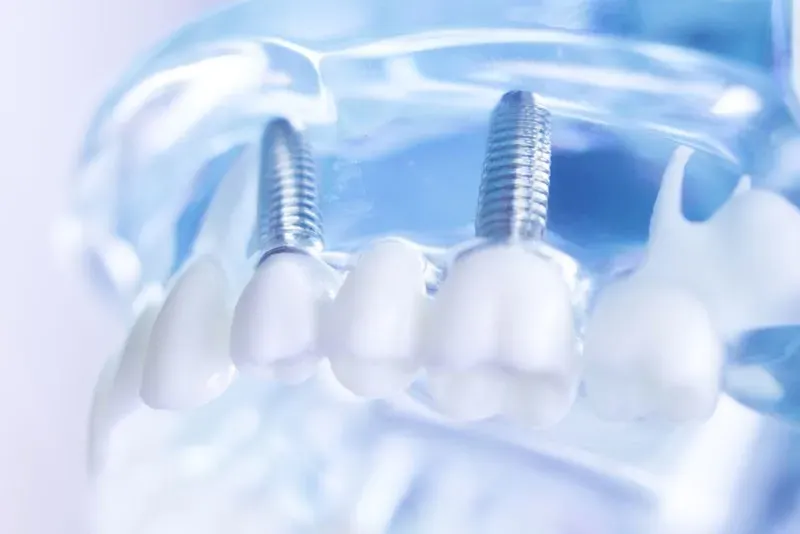
The visible recovery period of a few weeks is only the first phase of healing. Osseointegration, the process by which the titanium post fuses with the surrounding jawbone, occurs over several months and is not visible or particularly noticeable to the patient. This is the period during which the implant gains the mechanical stability that allows it to support a crown. Light activity can typically resume within a few days of placement; more strenuous activity may be restricted for a week or two depending on the case.
How long does swelling last after dental implant placement?
Swelling typically peaks around 48 to 72 hours after placement and begins to subside over the following days. Most patients find that swelling is largely resolved within a week. Applying ice packs to the outside of the face in the first two days can help reduce the peak swelling. If swelling increases significantly after the third or fourth day rather than decreasing, contact the office, as this can be a sign of infection.
Can I eat normally after implant placement?
A soft diet is recommended for the days immediately following placement. Avoiding hard, crunchy, or chewy foods at the implant site reduces stress on the healing tissue and lowers the risk of disrupting the surgical site. Most patients can return to a normal diet gradually over the first few weeks as healing progresses. Dr. Faust will give you specific dietary guidance based on how the procedure went.
When should I be concerned about my recovery?
Contact the office if you experience increasing pain or swelling several days after placement rather than decreasing, unusual discharge from the site, fever, numbness or tingling that does not resolve, or if the implant feels loose or unstable. These signs are not part of normal recovery and may indicate an infection or another issue that requires evaluation.
Does smoking affect dental implant recovery?
Yes, significantly. Smoking restricts blood flow, impairs immune response, and slows healing, all of which increase the risk of implant complications and failure. Patients who smoke are typically advised to stop smoking before placement and to refrain from smoking during the healing period. Continued smoking after placement increases the long-term risk of peri-implantitis and implant failure.
Bucks County Smiles in Yardley, PA
At Bucks County Smiles, we take care to prepare patients for every stage of the implant process, including what recovery involves and how to make it as smooth as possible. Dr. Faust provides detailed post-procedure guidance and is available to address questions that come up during healing. Learn more about his approach on his provider page.
Ready to move forward? Contact Bucks County Smiles to schedule your dental implant consultation in Yardley, PA.
