



Medically Reviewed by Dr. Kristen Scholl, DMD on September 23, 2026
When searching for information about replacing missing teeth, some patients type “inplant” instead of “implant” and wonder whether the two terms refer to different procedures. They do not. There is no dental treatment called an “inplant,” and the confusion almost always comes from an unfamiliar spelling or a misheard recommendation from a dentist. What patients in this situation are actually looking for is information about dental implants, and that information is worth understanding clearly before making any treatment decisions.
At Bucks County Smiles in Yardley, Pennsylvania, Dr. David Faust has walked many patients through the basics of dental implant treatment, including those who arrived with questions they were not quite sure how to phrase. Sorting out terminology is a small part of what happens during a consultation, but it often matters because the confusion tends to carry broader misconceptions with it.
What Dental Implants Actually Are
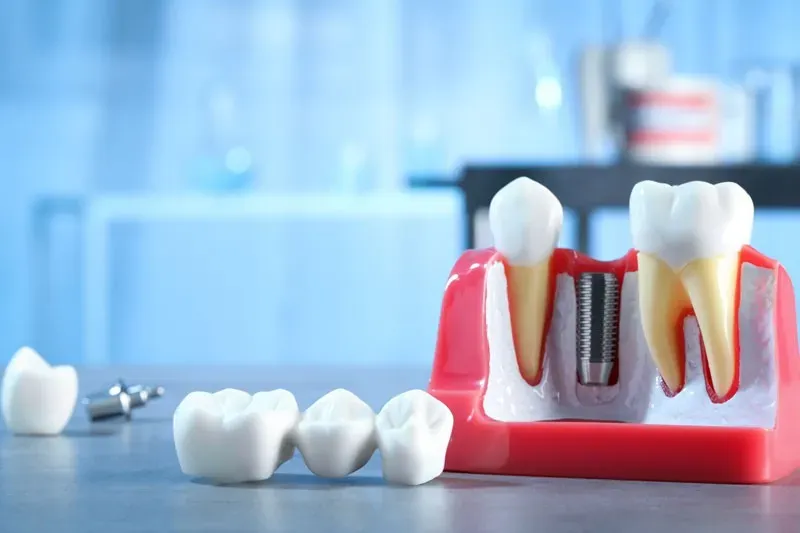
A dental implant is a titanium post that is surgically placed into the jawbone to serve as an artificial tooth root. The post integrates with the surrounding bone over a period of months through a process called osseointegration. Once integration is complete, a custom crown, bridge, or denture is attached to the post to complete the restoration above the gum line.
The implant itself is technically just the root portion, the titanium post in the bone. Patients often use the word loosely to refer to the entire restoration, including the visible crown or prosthesis. Both usages are common, and most dental providers understand what patients mean either way. The key distinction is that the implant post is permanent and designed to remain in the jaw indefinitely, while the crown attached to it may eventually need to be replaced due to wear.
Common Misconceptions That Delay Treatment
Terminology confusion is one of many reasons patients delay pursuing tooth replacement. Several others come up consistently during consultations.
One common assumption is that implants are only for younger patients, or that older adults are not good candidates. In practice, there is no upper age limit for implant treatment as long as the patient is in reasonable health and has adequate jawbone density. Many patients in their seventies and eighties have been treated successfully.
Another is that implants are always painful. The procedure is performed under local anesthesia, and most patients report that the recovery is more manageable than they anticipated. The comparison to a tooth extraction is often used because it is familiar: recovery from implant placement is generally comparable or less uncomfortable than that benchmark.
A third misconception is that implants require a great deal of special maintenance. They do not. Implants are cared for exactly like natural teeth: regular brushing, flossing around the post, and professional cleanings twice a year. No adhesives, no soaking, no specialized cleaning products are required.
Who Is a Good Candidate for Dental Implants
Most healthy adults with adequate bone volume at the implant site are candidates. The most important physical requirement is having enough jawbone to anchor the titanium post securely. Patients who have had a missing tooth for some time often experience bone resorption at that site, since the jawbone naturally shrinks when it is no longer stimulated by a tooth root. Bone grafting can restore the necessary density for patients in this situation.
The National Institute of Dental and Craniofacial Research’s Oral Health in America report has documented the relationship between tooth loss and jawbone resorption, reinforcing the case for addressing missing teeth sooner rather than later. Patients who have uncontrolled diabetes, active gum disease, or who smoke are at elevated risk for complications and will need to address those factors as part of the planning process.
What to Expect During the Process
Dental implant treatment takes place in stages. The implant post is placed first, followed by a healing period during which osseointegration occurs. A temporary restoration may be placed during this time depending on the location and the patient’s circumstances. Once the post has fully integrated, the final crown or prosthesis is fabricated and attached.
The total timeline depends on the number of implants, whether bone grafting is needed, and how quickly healing progresses. A straightforward single-tooth implant typically takes four to six months from placement to final crown. More complex cases or those involving grafting can take nine to eighteen months or longer.
Is there a difference between an implant and a crown?
Yes. The implant is the titanium post placed into the jawbone that serves as an artificial root. The crown is the visible tooth-shaped restoration that sits on top of the post above the gum line. Together they form a complete tooth replacement, but they are separate components. The implant post is designed to be permanent, while the crown may need to be replaced after a decade or more of normal wear.
Can dental implants fail?
Implant failure is uncommon in healthy patients who maintain good oral hygiene, but it can occur. Smoking, uncontrolled diabetes, and insufficient bone volume are the most common contributing factors. An infection of the tissue around the implant, called peri-implantitis, can also develop if oral hygiene is neglected. Most failures are detectable early and can be addressed when caught at routine maintenance appointments.
How long do dental implants last?
The titanium post is designed to be a permanent fixture in the jaw and can last decades with proper care. The crown or prosthesis attached to it may need to be replaced after 10 to 15 years due to normal wear. Patients who maintain consistent oral hygiene and attend regular professional cleanings tend to have the best long-term outcomes.
Does insurance cover dental implants?
Coverage varies significantly by plan. Some dental insurance policies include partial coverage for implant placement, particularly when the tooth loss is linked to an accident or a covered medical reason. Many plans categorize implants as an elective procedure and do not cover them. The team at Bucks County Smiles can review your coverage and discuss financing options during your consultation.
Bucks County Smiles in Yardley, PA
Whether you have specific questions about terminology or are ready to begin evaluating your options for tooth replacement, Dr. Faust and the team at Bucks County Smiles are here to walk you through the process clearly and without pressure. We provide dental implant care for patients dealing with single missing teeth, multiple gaps, and full-arch restoration needs. Learn more about Dr. Faust’s background on his provider page.
Ready to move forward? Contact Bucks County Smiles to schedule your dental implant consultation in Yardley, PA.
ABOUT THE AUTHOR
Dr. Kristen Scholl, DMD
Clinical Director, Bucks County Smiles, Yardley, PA
Dr. Kristen Scholl earned her Doctor of Dental Medicine degree from the University of Pennsylvania School of Dental Medicine and completed her undergraduate studies at Penn State University’s Schreyer Honors College. Clinical Director of Bucks County Smiles, she is a Premier Invisalign® Provider with advanced training in dental sleep medicine and TMJ treatment, serving patients in Yardley and throughout Bucks County, PA.
