

Medically Reviewed by Dr. Kristen Scholl, DMD on September 23, 2026
At our dental office, we understand that losing a tooth can be a traumatic experience with impacts that extend far beyond aesthetics. A missing tooth in Yardley, PA can create complications, including difficulty chewing, speaking clearly, and even drifting adjacent teeth into the void left by the missing tooth. It also can lead to bone loss around the disappeared spot. We empathize with these challenges and the associated distress they bring to people. Hence, we are here to examine and tackle the situation as early as possible, offering our understanding and care every step of the way.
The Various Options for Tooth Replacement in Yardley, PA
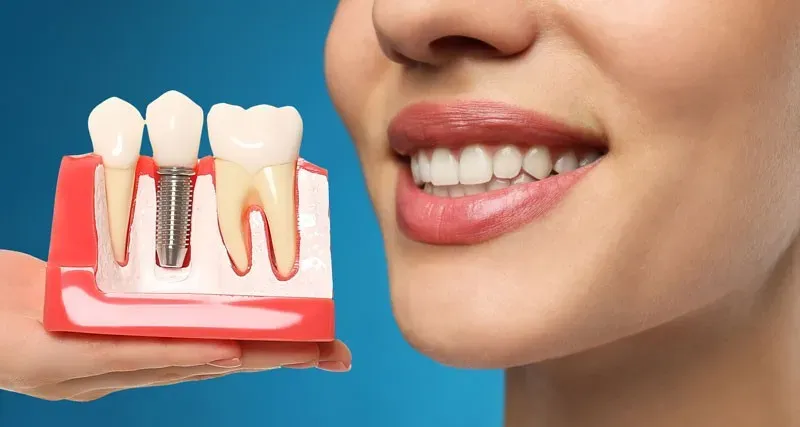
Thankfully, advancements in modern dentistry have provided many viable solutions to replace a missing tooth or even multiple teeth. These options include dentures, which are artificial teeth and gums tailored to fit your mouth; bridges, that ‘bridge’ the gap where one or more teeth might be absent; and dental implants, which consist of an artificial tooth root placed into your jaw to hold a replacement tooth or bridge. Each option has its pros and cons and should be considered carefully.
Why Dental Implants are an Excellent Choice
Among the various options, dental implants stand out for several reasons. They offer strength and durability comparable to natural teeth, providing a permanent solution not prone to decay. An implant replenishes the tooth from root to crown, maintaining bone levels and preventing the shifting of adjacent teeth. Moreover, unlike dentures, they do not require additional removal or maintenance beyond regular brushing and flossing. With dental implants, you can feel confident in your smile, knowing you have chosen a long-lasting and reliable solution.
The Process of Getting a Dental Implant
We offer a comprehensive process for dental implants in Yardley, PA. This starts with an initial consultation to assess your oral health and suitability for the procedure. The implant is then placed, onto which a replacement tooth is mounted. Aftercare includes regular check-ups and maintaining good oral hygiene.
We aim to provide top-quality dental care using the latest technology and procedures. In addition to dental implants, we offer various services to improve and maintain oral health. Our experienced team is dedicated to ensuring a comfortable and successful experience with any procedure you undergo.
Choose An Expert For Your Dental Implants!
We possess the expertise and skills necessary for such complex procedures, and our team is committed to patient comfort and well-being. From our state-of-the-art facilities to our responsive and caring staff, we make it our mission to help you regain your beautiful smile. With us, you can feel secure, knowing that you are in the hands of experienced professionals dedicated to your oral health.
Ready to take the next step towards a confident smile? With Dr. Faust, you’re in safe hands. Renowned for our expertise, dedication to patient care, and proven results, we excel in dental implant procedures. Please no longer delay your smile transformation; contact our office in Yardley, PA, today to schedule!
What happens to the jawbone when a missing tooth is not replaced?
When a tooth root is lost and not replaced, the jawbone in that area no longer receives the stimulation it needs to maintain its density. The body responds by gradually resorbing the bone, reducing its height and width over time. This process, known as bone resorption, can lead to shifting of adjacent teeth, changes in bite alignment, and eventually a sunken appearance in the face. Dental implants are the only tooth replacement option that replaces the root and prevents this resorption from occurring.
What is the difference between dental implants and a dental bridge?
A dental bridge spans the gap created by a missing tooth by anchoring an artificial tooth to the adjacent teeth on either side, which must be permanently altered to serve as anchors. A dental implant, by contrast, is placed directly into the jawbone and functions independently without affecting surrounding teeth. Implants also prevent bone resorption beneath the restoration, which a bridge cannot do. Both are effective options, and the best choice depends on factors like bone density, the condition of adjacent teeth, and overall oral health.
How long do dental implants last compared to other tooth replacement options?
Dental implants are designed to be a permanent, long-term solution. With proper care, the implant post itself can last a lifetime, while the crown attached to it typically lasts fifteen to twenty-five years depending on wear and care habits. Dentures and bridges generally require replacement or relining over time, often due to changes in the jaw structure. The bone-preserving function of implants also helps maintain a stable jaw structure, which supports better long-term outcomes compared to options that do not replace the root.
What is involved in getting a dental implant at Bucks County Smiles?
The process begins with a consultation where Dr. Faust evaluates your oral health, jawbone density, and suitability for implant placement. If sufficient bone is available, the titanium implant post is surgically placed into the jaw. A healing period follows during which the post integrates with the bone through osseointegration. Once integration is confirmed, a custom crown is attached to complete the restoration. The team provides guidance on aftercare and follow-up to ensure the implant heals and functions properly for the long term.
ABOUT THE AUTHOR
Dr. Kristen Scholl, DMD
Clinical Director, Bucks County Smiles, Yardley, PA
Dr. Kristen Scholl earned her Doctor of Dental Medicine degree from the University of Pennsylvania School of Dental Medicine and completed her undergraduate studies at Penn State University’s Schreyer Honors College. Clinical Director of Bucks County Smiles, she is a Premier Invisalign® Provider with advanced training in dental sleep medicine and TMJ treatment, serving patients in Yardley and throughout Bucks County, PA.
