
Losing a full arch of teeth — whether through decay, disease, or injury — affects far more than appearance. It changes how you eat, how you speak, and how you feel in everyday social situations. For many people living with complete tooth loss or severely failing dentition, the question isn’t whether to do something, but which solution will actually last.
At Bucks County Smiles in Yardley, Dr. David Faust and our team offer full mouth dental implants as a permanent, customized solution that restores complete arch function and aesthetics. Because no two people have the same smile, jaw structure, or bone anatomy, every full mouth implant case is planned and built specifically for you.
How Full Mouth Dental Implants Are Customized
The customization process begins with a thorough dental examination, 3D imaging, and a detailed assessment of your oral health. We evaluate bone density and volume, jaw dimensions, and gum tissue to build a precise picture of what your mouth looks like beneath the surface. This information directly shapes the placement plan, including how many implant posts are needed and exactly where each one should go for maximum stability.
The final prosthesis — whether a zirconia fixed bridge or another arch design — is fabricated to your exact specifications. You work with our team to select the shade, shape, and proportions that look natural and suit your facial features. This is not an off-the-shelf product; it is a custom restoration designed from scratch for your specific anatomy and aesthetic goals.
The Full Mouth Implant Process Step by Step
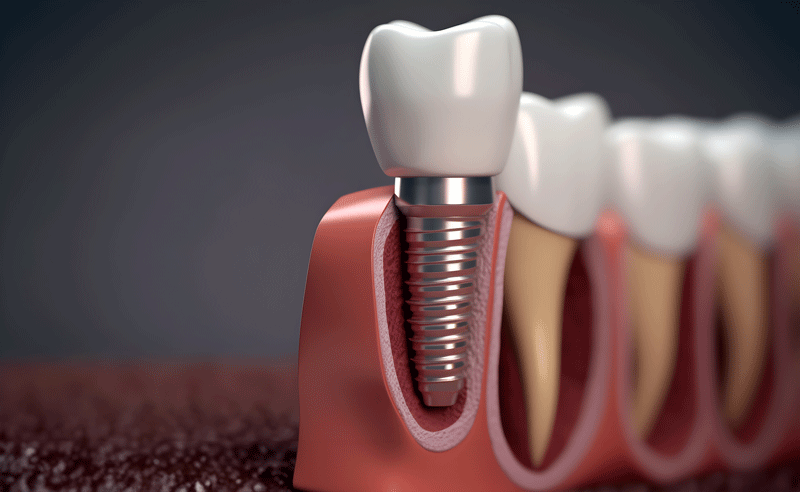
The process begins with your consultation and treatment planning, followed by any preparatory procedures that may be needed — such as extractions for remaining failing teeth or bone grafting if bone volume is insufficient. Once your jaw is ready, four or more dental implant posts are strategically placed in positions that distribute bite forces evenly across the arch.
A temporary prosthesis is placed for most patients on the same day as surgery, so you leave with functional teeth. Over the following months, the implant posts fuse with the jawbone through osseointegration, creating a permanent anchor. Once integration is confirmed, the final, custom-designed prosthesis is attached. From that point forward, full mouth implants function like natural teeth — you can eat a normal diet and speak without the limitations that come with traditional dentures.
Are You a Good Candidate for Full Mouth Dental Implants
Good candidates for full mouth dental implants are missing all or most teeth in one or both arches, or have teeth that are failing and need to be replaced. Adequate jawbone density is important, though bone grafting can address deficiencies in many cases. Good general health and the absence of uncontrolled systemic conditions that affect healing are also considered during evaluation.
Patients who have struggled with ill-fitting dentures, bone loss from long-term tooth loss, or the daily frustration of removable appliances are often the strongest candidates. A consultation at Bucks County Smiles gives us the clinical data needed to determine whether full mouth implants are right for your situation and what the treatment timeline would look like from start to finish.
Frequently Asked Questions About Full Mouth Dental Implants
How many implant posts are used for a full mouth restoration?
Most full mouth implant cases use four to six implant posts per arch, though the exact number depends on your bone anatomy and the type of prosthesis being placed. The posts are positioned at angles that maximize contact with available bone and distribute chewing forces effectively. Your treatment plan will specify the exact number and placement based on your 3D imaging and clinical evaluation.
Can I eat normally with full mouth dental implants?
Yes. One of the most significant advantages of full mouth dental implants over traditional dentures is the ability to eat a normal, unrestricted diet. Because the implant posts are anchored in the jawbone, the prosthesis does not move during chewing. Most patients are able to return to foods they had been avoiding for years. Hard or very chewy foods are fine once osseointegration is complete and the final prosthesis is in place.
How long does the full mouth implant process take from start to finish?
The full timeline typically ranges from six months to over a year, depending on whether preparatory procedures like extractions or bone grafting are needed and how quickly osseointegration progresses. Most patients receive a temporary prosthesis at the time of implant placement, so they have functional teeth throughout the healing period. The final prosthesis is delivered once the implants have fully integrated with the jawbone.
How do I care for full mouth dental implants?
Full mouth dental implants are cared for much like natural teeth — daily brushing, flossing or water flossing around the implant posts, and regular professional cleanings. Unlike natural teeth, the implant posts themselves cannot develop cavities, but the surrounding gum and bone tissue must be kept healthy to maintain long-term integration. We will provide specific home care instructions at your follow-up appointments.
Schedule Your Full Mouth Implant Consultation at Bucks County Smiles
Full arch tooth replacement with dental implants is one of the most life-changing procedures we offer. Dr. Faust and our team at Bucks County Smiles approach every case with the detailed planning and individual attention that a procedure of this scope requires. Whether you have a full arch of missing teeth or severely compromised dentition that needs to be replaced, we can help you determine whether full mouth implants are the right solution and map out a clear path forward.
Contact us today to schedule your consultation and take the first step toward a permanent, customized new smile.
